
DSE Assessments: Protecting Office Workers
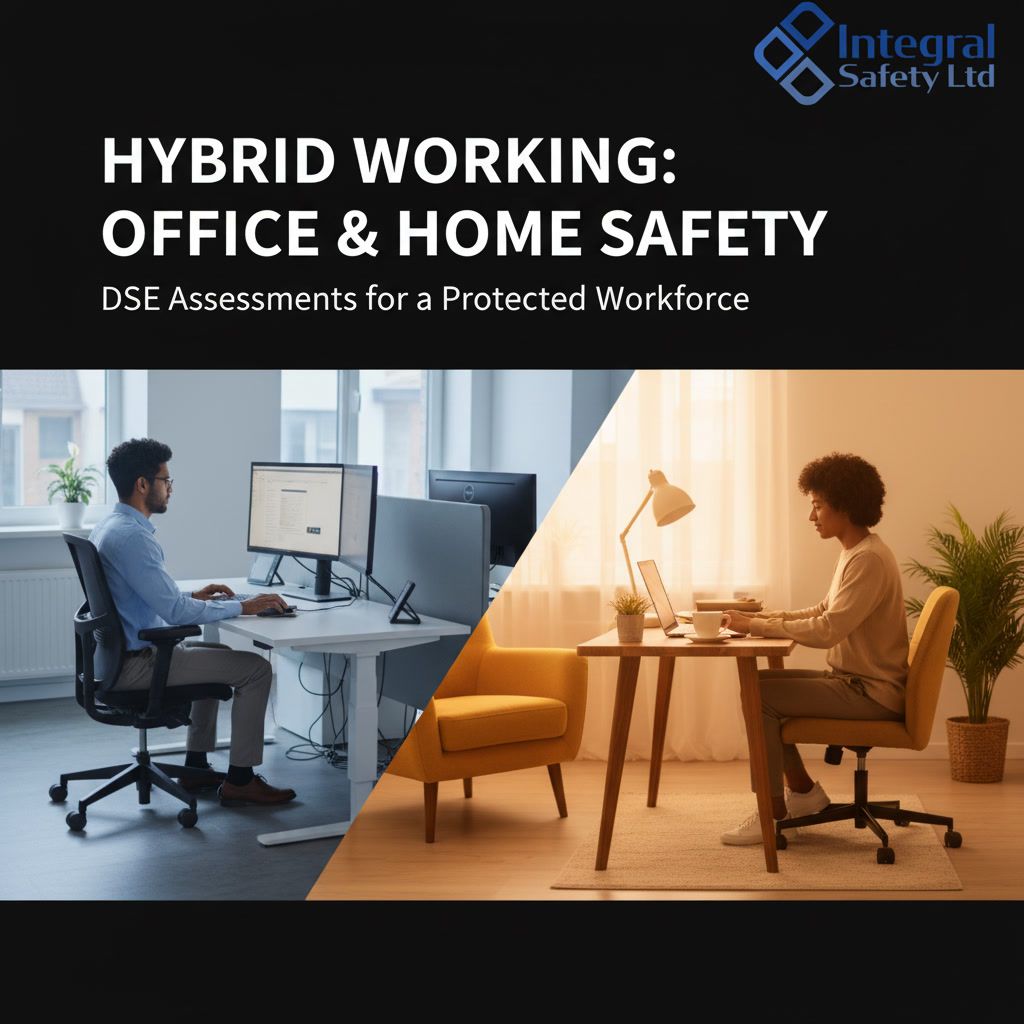
The Health and Safety (Display Screen Equipment) Regulations 1992 require employers to protect workers who regularly use computers and other display screen equipment. With the growth of hybrid working, these requirements now extend to home working setups.
Who is a DSE User?
An employee is a DSE user if they habitually use display screen equipment as a significant part of their normal work. This typically means using DSE for continuous periods of an hour or more on most days.
Employer Duties
For DSE users, employers must:
- Assess workstations and reduce risks identified
- Ensure workstations meet minimum requirements
- Plan work to include breaks or changes of activity
- Provide eye tests on request and glasses if needed for DSE work
- Provide health and safety training and information
Workstation Requirements
The regulations set minimum standards for:
Display Screen
- Clear, well-defined characters
- Adjustable brightness and contrast
- Easily tilting and swivelling screen
- No reflections or glare
Keyboard
- Separate from screen (for desktop use)
- Tiltable with legible symbols
- Space in front for hands to rest
Work Surface
- Sufficiently large for flexible arrangement
- Low reflectance surface
- Document holder if needed
Chair
- Adjustable height seat and back
- Stable five-point base
- Footrest if needed
Home Working Considerations
The same DSE regulations apply to home workers as to office workers. Employers should:
- Conduct DSE assessments for home workstations
- Provide equipment where necessary (chairs, monitors, keyboards)
- Offer guidance on workstation setup
- Ensure workers know how to adjust their equipment
- Review arrangements periodically
Common DSE Issues
Problems frequently identified include:
- Screen positioned too high or low
- Working from laptops without external peripherals
- Poor lighting causing glare or eye strain
- Insufficient desk space
- Unsuitable seating
- Lack of movement or breaks
Health Effects
Poor DSE setup can lead to:
- Musculoskeletal disorders (back, neck, shoulder, arm pain)
- Eye strain and headaches
- Fatigue and stress
Integral Safety can help you develop effective DSE assessment processes for both office and home-based workers, including self-assessment tools and manager training.
How Integral Safety Can Help
Need advice specific to your business? Get in touch for a free, no-obligation consultation.
