
Legionella Risk Assessment
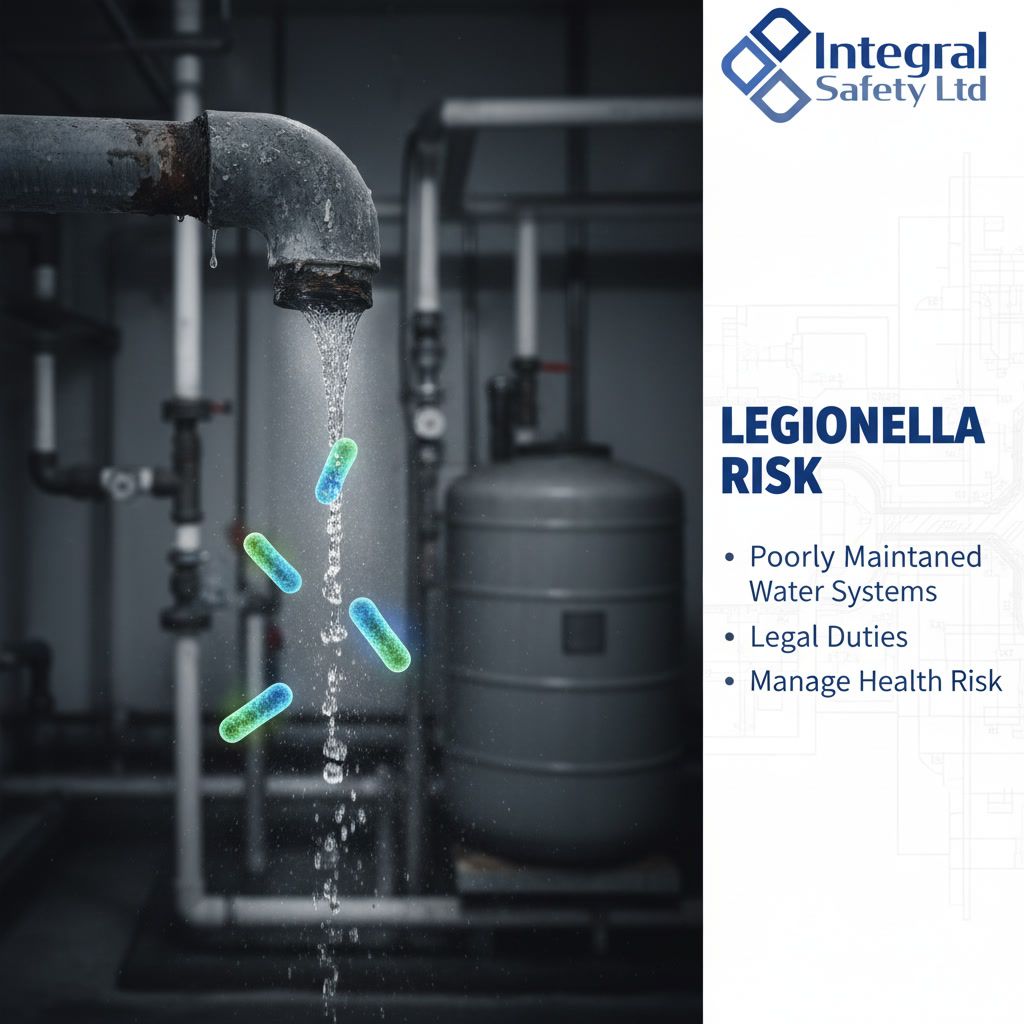
Legionnaires' disease is a potentially fatal form of pneumonia caused by Legionella bacteria. These bacteria thrive in water systems between 20-45 degrees Celsius and can be inhaled through water droplets. Employers and building owners have a legal duty to assess and control Legionella risks.
Legal Requirements
Under the Health and Safety at Work Act 1974 and Control of Substances Hazardous to Health Regulations 2002 (COSHH), duty holders must:
- Identify and assess sources of Legionella risk
- Prepare a scheme to prevent or control risk
- Implement and manage the scheme
- Keep records
- Appoint a competent responsible person
High-Risk Water Systems
Systems that may require Legionella risk assessment include:
- Hot and cold water systems
- Cooling towers and evaporative condensers
- Spa pools and hot tubs
- Humidifiers and air washers
- Dental equipment
- Vehicle wash systems
- Indoor fountains and water features
Risk Factors
Conditions that increase Legionella risk:
- Water temperature between 20-45 degrees Celsius
- Stagnation (dead legs, infrequently used outlets)
- Biofilm and scale deposits
- Nutrients for bacterial growth (rust, sludge, organic matter)
- Aerosol generation (showers, spray taps, cooling towers)
Who is at Risk?
While anyone can contract Legionnaires' disease, higher risk groups include:
- People over 45 years old
- Smokers and heavy drinkers
- People with chronic respiratory or kidney disease
- Those with weakened immune systems
Control Measures
Key control measures include:
Temperature Control
- Store hot water at 60 degrees Celsius or above
- Distribute hot water at 50 degrees Celsius or above
- Keep cold water below 20 degrees Celsius
System Management
- Avoid stagnation - flush little-used outlets weekly
- Remove dead legs and redundant pipework
- Clean and disinfect systems regularly
- Maintain accurate records
Monitoring
- Monthly temperature checks at representative outlets
- Quarterly checks of calorifier temperatures
- Visual inspections of tanks and calorifiers
- Water sampling where appropriate
Legionella Risk Assessment
A competent assessment should:
- Identify all water systems and their components
- Assess the risk of Legionella exposure
- Recommend control measures
- Specify monitoring and maintenance requirements
- Be reviewed every two years or when circumstances change
Integral Safety works with water hygiene specialists to provide comprehensive Legionella risk assessments and ongoing monitoring services.
How Integral Safety Can Help
Need advice specific to your business? Get in touch for a free, no-obligation consultation.
