Manual Handling: Reducing Workplace Injuries
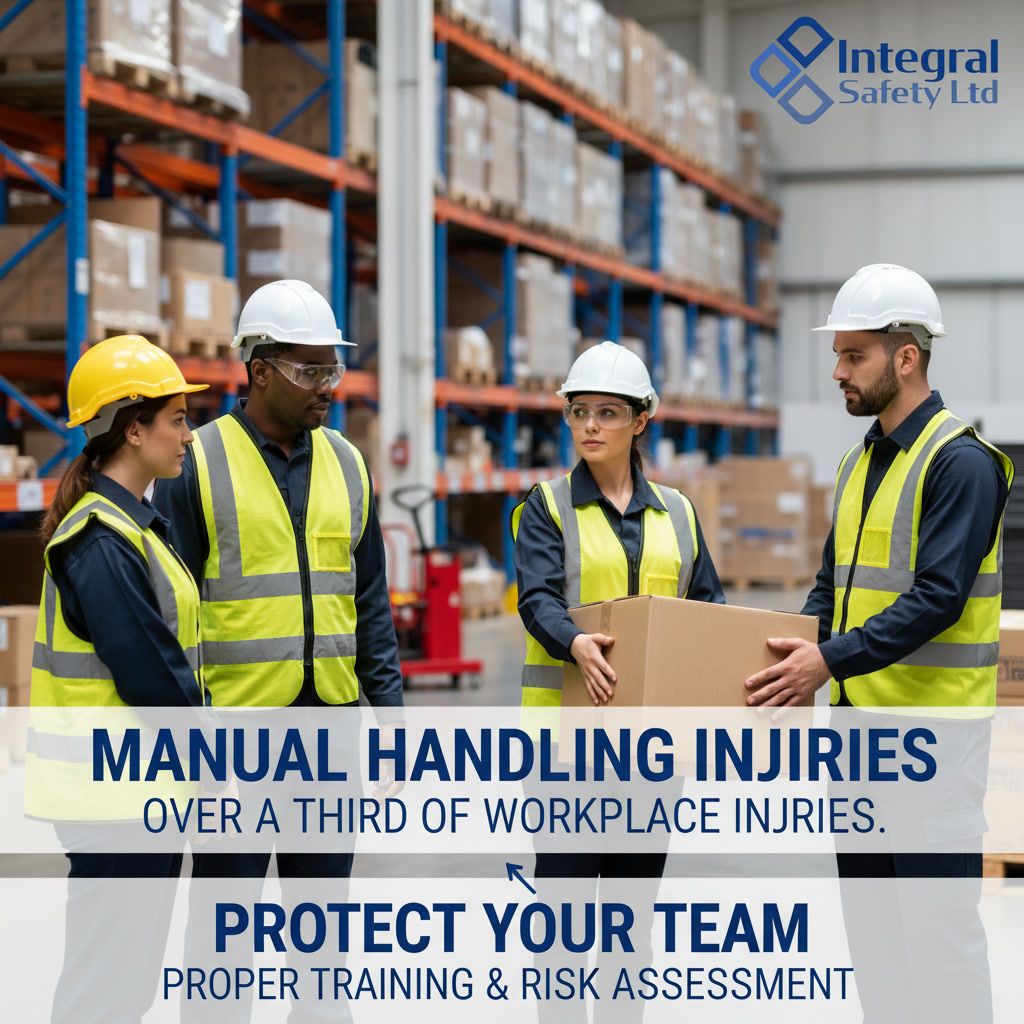
Manual handling injuries remain one of the most common causes of workplace ill health in the UK. According to HSE statistics, handling, lifting, and carrying activities account for over a third of all workplace injuries, resulting in millions of lost working days each year.
What is Manual Handling?
Manual handling refers to any transporting or supporting of a load by hand or bodily force. This includes lifting, putting down, pushing, pulling, carrying, or moving loads. The load can be an object, person, or animal.
Legal Requirements
The Manual Handling Operations Regulations 1992 require employers to:
- Avoid hazardous manual handling operations where reasonably practicable
- Assess any hazardous operations that cannot be avoided
- Reduce the risk of injury as far as reasonably practicable
- Review assessments if circumstances change
Risk Factors in Manual Handling
When assessing manual handling risks, consider the TILE acronym:
Task
Does the task involve twisting, stooping, reaching upward, large vertical movement, long carrying distances, strenuous pushing or pulling, or repetitive handling?
Individual
Does the task require unusual strength or height, pose a risk to those with health problems or pregnant workers, or require specialist knowledge or training?
Load
Is the load heavy, bulky, difficult to grasp, unstable, sharp, hot, or cold?
Environment
Are there space constraints, uneven floors, slippery surfaces, variations in levels, poor lighting, or extreme temperatures?
Reducing Manual Handling Risks
Apply the hierarchy of control:
- Avoid - Can the task be eliminated or automated?
- Mechanise - Can handling aids be used (trolleys, hoists, conveyors)?
- Redesign - Can the task or load be modified to reduce risk?
- Train - Ensure workers understand safe handling techniques
The Value of Training
While training alone is not sufficient to control manual handling risks, it is an essential component of any risk reduction strategy. Effective training helps workers:
- Understand the risks and their causes
- Recognise hazardous handling activities
- Use appropriate handling techniques
- Make proper use of mechanical aids
- Report problems and suggest improvements
Our manual handling training courses combine theory with practical exercises, ensuring participants can apply what they learn directly to their work activities.
How Integral Safety Can Help
Need advice specific to your business? Get in touch for a free, no-obligation consultation.