Fire Door Safety: Maintenance and Compliance
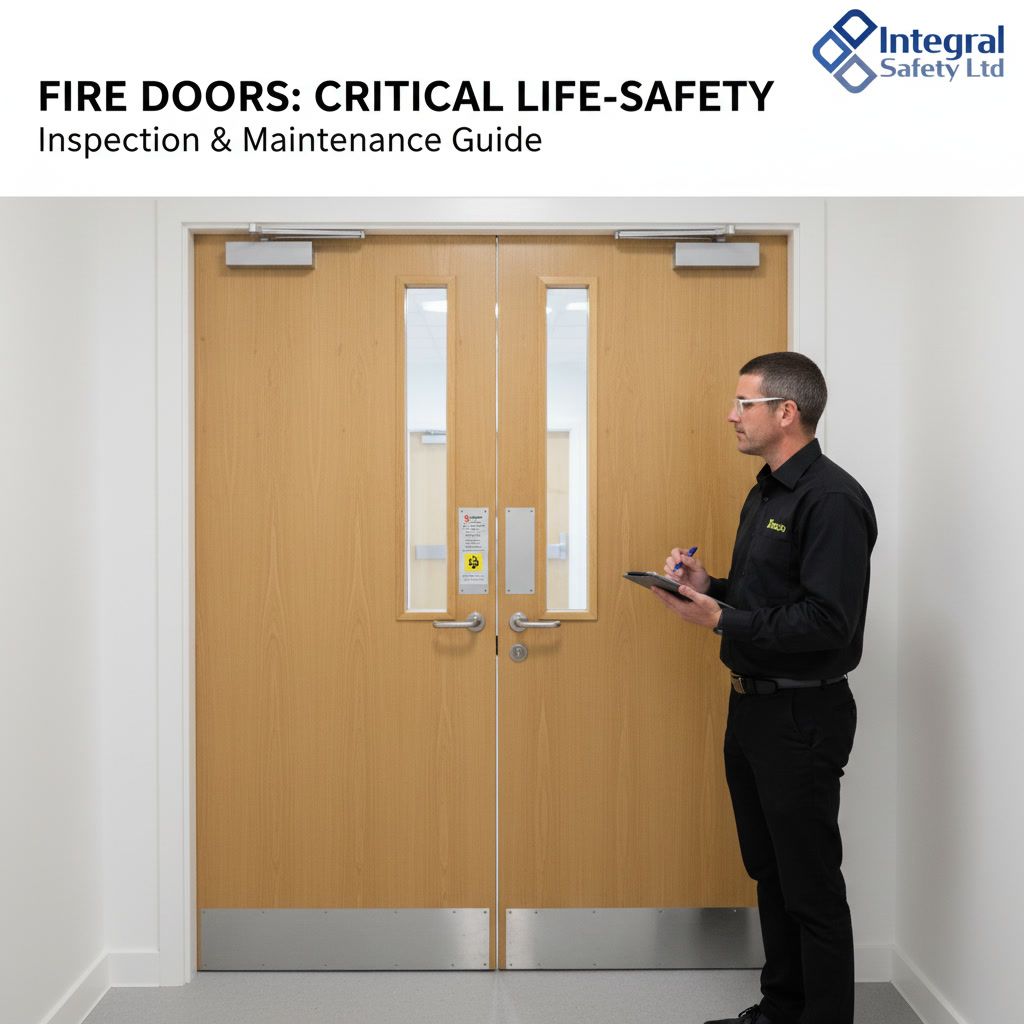
Fire doors are critical life-safety features designed to compartmentalise buildings and protect escape routes. Yet they are frequently found to be defective during fire risk assessments. Understanding fire door requirements is essential for building managers and responsible persons.
How Fire Doors Work
Fire doors are engineered to:
- Resist the passage of fire for a specified period (typically 30 or 60 minutes)
- Prevent the spread of smoke through intumescent strips and smoke seals
- Self-close to ensure protection is maintained
- Allow safe evacuation while containing fire spread
Regulatory Requirements
The Regulatory Reform (Fire Safety) Order 2005 requires the responsible person to ensure fire safety measures, including fire doors, are properly maintained. The Fire Safety (England) Regulations 2022 introduced additional requirements for residential buildings, including quarterly checks of flat entrance doors and annual checks of fire doors in common areas.
Common Fire Door Defects
Our fire risk assessments regularly identify these issues:
- Damaged or missing intumescent strips and smoke seals
- Faulty or disconnected self-closing devices
- Excessive gaps around doors (over 3mm)
- Doors held open without automatic release devices
- Damaged door leaves, frames, or glazing
- Incorrect hinges (three required for fire doors)
- Inappropriate locks or furniture
Inspection Frequency
Fire doors should be checked at regular intervals:
- Weekly - Visual check by building users/staff
- Monthly - More detailed check by trained staff
- Annually - Comprehensive inspection by a competent person
What to Check
A basic fire door inspection should verify:
- The door closes fully into the frame
- All seals and strips are present and undamaged
- The self-closer operates correctly
- Gaps around the door are consistent (2-4mm typically)
- Hinges are secure with no missing screws
- The door is not damaged, split, or warped
- Vision panels are intact
- Signage is present where required
When to Replace
Fire doors should be replaced if:
- They cannot be repaired to meet fire resistance requirements
- Damage is extensive or structural
- The door no longer fits correctly in the frame
- Third-party certification cannot be verified
Our fire door surveys provide a detailed assessment of all fire doors within your building, identifying defects and recommending proportionate remedial actions.
How Integral Safety Can Help
Need advice specific to your business? Get in touch for a free, no-obligation consultation.